Your carpet functions as the primary air filter for your home, capturing airborne dust, pet dander, and microscopic pollen before they enter your breathing zone. However, once these fibers reach full capacity, everyday foot traffic kicks those trapped irritants right back into the air. Managing indoor allergies requires looking directly at your flooring and treating it as a dynamic filtration system that demands proper maintenance.
At Queens Carpets Cleaning, we help homeowners across Queens, New York neutralize hidden contaminants and maintain a healthy living space. Understanding how allergens accumulate in your home allows you to take control of your indoor air quality and protect your household from year-round respiratory triggers.
The Science of How Carpets Trap Indoor Allergens
Carpet fibers possess a massive surface area that excels at catching particulate matter. According to data from the Environmental Protection Agency, indoor pollutant levels can often exceed outdoor concentrations significantly, making floor maintenance a vital health priority.
When microscopic particles settle indoors, they drop straight into the pile of your rugs and wall-to-wall carpeting.
- Dust Mites: These microscopic arachnids feed on shed human skin cells and thrive deep within warm textile bases. Their waste products remain a primary trigger for perennial indoor allergies.
- Pet Dander: Proteins found in cat and dog saliva, skin flakes, and urine cling stubbornly to synthetic and natural carpet fibers alike.
- Pollen and Spores: Footwear and open windows introduce outdoor seasonal pollens and mold spores that settle quickly into floor coverings.
- Chemical Particulate: Fine dust can carry volatile organic compounds and urban particulate pollution indoors, depositing them securely into your flooring.
Vacuuming Versus Professional Deep Cleaning
Routine vacuuming is non-negotiable for removing surface debris, but it only tells half of the story. Standard household vacuums capture loose dirt from the upper layers of the pile, yet they lack the extraction power required to reach the backing where dense allergens compress over time.
Relying solely on surface vacuuming leaves behind packed layers of organic waste. Reviewing standard maintenance intervals clarifies how to balance daily chores with expert extraction to keep your home environment safe.
| Cleaning Method | Frequency | Target Contaminants | Limitation |
|---|---|---|---|
| Standard Vacuuming | 2 to 3 times weekly | Surface dust, loose pet hair, large crumbs | Misses deep-set dust mite waste and oils |
| HEPA Filter Vacuuming | Weekly | Fine particulate matter, surface allergens | Cannot extract oily residues or embedded mold |
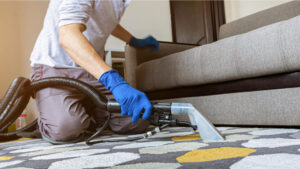
| Professional Hot Water Extraction | Every 12 to 18 months | Deep-set dander, bacteria, chemical residues, dust mites | Requires drying time post-service |
Actionable Steps for an Allergy-Safe Home
Controlling indoor triggers takes a systematic approach. Implementing these core strategies minimizes allergen resuspension and keeps your carpet acting as a functional asset rather than a hazard.
- Use Certified Equipment: Always use a vacuum equipped with a HEPA filter to ensure captured microscopic spores do not escape back out through the exhaust.
- Control Indoor Humidity: Keep relative humidity levels below 50 percent using dehumidifiers to stop dust mites and mold spores from multiplying.
- Enforce a No-Shoe Policy: Leave outdoor shoes at the door to block street-level pollens, pesticides, and heavy dirt from embedding into high-traffic paths.
- Schedule Professional Cleanings: Partner with experts like Queens Carpets Cleaning every year to execute a deep steam or hot water extraction that flushes out stubborn irritants.
Frequently Asked Questions
Should I remove all my carpets if I have severe allergies?
Not necessarily. According to findings highlighted by the Asthma and Allergy Foundation of America, modern research shows that removing carpet is not an automatic cure for indoor allergies. Because carpets trap dust below the breathing zone, a clean carpet can actually hold particulate matter better than bare floors that allow dust to sweep back into the air with every step.
How often should carpets be professionally cleaned in homes with pets?
Homes with shedding pets or family members suffering from chronic asthma should schedule professional extraction every 6 to 12 months. Regular professional care stops pet dander and tracked outdoor allergens from accumulating past safe thresholds.
Does hot water extraction leave moisture that causes mold?
Professional equipment utilizes high-pressure extraction and powerful vacuum motors to pull out over 90 percent of the moisture applied during the cleaning process. Proper technician handling ensures carpets dry completely within 4 to 6 hours, preventing any chance of mold development.
Sources
- Environmental Protection Agency (EPA) Indoor Air Quality Guidelines
- The Carpet and Rug Institute (CRI) – Carpet Improves Indoor Air Quality Standards
- American Lung Association – Indoor Pollutants and Allergens Research
Related Articles
Best Methods To Turn Your Carpet Into An Allergen Free Zone
How Non‑Toxic Cleaners Protect Your Family, Pets, And Indoor Air
People Also Ask
To help with allergies, the most effective thing you can put on your carpet is a dry, EPA-approved anti-allergen powder or a light dusting of baking soda. These products work by neutralizing common irritants like pet dander and dust mite waste. However, powders alone are not a cure; they must be thoroughly vacuumed out afterward to prevent residue buildup. For a deeper solution, professional hot water extraction is the gold standard, as it flushes out allergens trapped deep in the fibers. At Queens Carpets Cleaning, we recommend a routine that combines gentle vacuuming with a quarterly deep clean. For a complete seasonal strategy, please review our internal article titled Spring Allergy Defense: Carpet Cleaning Essentials to understand how proper maintenance reduces airborne triggers. Always test any product in a small, hidden area first to avoid discoloration.
Dust mites are repelled by a few specific scents, most notably eucalyptus, tea tree, clove, and lavender essential oils. These strong aromatic compounds disrupt their respiratory systems and deter them from settling in fabrics. For a practical approach, mix a few drops of your chosen oil with water in a spray bottle and lightly mist your mattress, pillows, and upholstery—always test a small area first. However, scent alone is not a complete solution. Regular hot washing (above 130°F) and vacuuming with a HEPA filter are far more effective at removing the mites themselves. At Queens Carpets Cleaning, we recommend combining natural deterrents with professional deep cleaning to truly break the allergen cycle.
Vacuuming is your first line of defense against dust mites, but it cannot remove them all. A standard vacuum can extract surface dust, dead skin cells, and some mites, but dust mites burrow deep into the carpet fibers and their adhesive pads cling tightly to the base. To significantly reduce their population, you need a vacuum with a HEPA filter and a high-powered beater bar, which agitates the pile to loosen debris. However, even the best vacuum will miss the microscopic eggs and deep-seated allergens. For a truly deep clean, professional hot water extraction is recommended. At Queens Carpets Cleaning, we use industrial-grade equipment that reaches the carpet base, effectively flushing out mites and their waste. For a complete breakdown of techniques, refer to our internal article titled 'Frequently Asked Carpet-Cleaning Questions Answered In Plain Language' at Frequently Asked Carpet-Cleaning Questions Answered In Plain Language.
The first signs of a dust mite issue are often mistaken for a common cold or seasonal allergies. You may notice frequent sneezing, a runny or stuffy nose, and itchy, watery eyes, especially upon waking up. Another key indicator is increased nasal congestion or post-nasal drip that persists indoors. For many, the most telling sign is a dry, scratchy throat or a mild cough that lingers. Skin reactions, such as small, red, itchy bumps, can also appear on exposed skin. If these symptoms flare up primarily when you are in bed or after vacuuming, dust mites are likely the culprit. A professional deep cleaning, like the one offered by Queens Carpets Cleaning, can significantly reduce these triggers by removing the allergens embedded in your carpets and upholstery.
Sudden allergies to your home are often triggered by changes in your indoor environment or your own sensitivity. Common culprits include dust mites thriving in bedding and upholstery, mold growth from hidden moisture, or pollen and pollutants tracked inside. Pet dander and shed skin cells can also accumulate, especially in carpets, which act as a filter for allergens. If you have recently changed cleaning products, brought in new furniture, or experienced a shift in humidity, these can all contribute. To find relief, start by washing bedding in hot water weekly, using a HEPA air purifier, and vacuuming with a high-efficiency filter. For a deep reset, a professional hot water extraction cleaning, like the one offered by Queens Carpets Cleaning, can remove trapped allergens from your carpets and restore indoor air quality.
To naturally reduce dust mites in carpets, start by vacuuming at least twice a week using a HEPA-filter vacuum to capture allergens rather than recirculating them. Sprinkle a fine layer of food-grade diatomaceous earth over the carpet, let it sit for a few hours or overnight, then vacuum thoroughly; the sharp microscopic particles dehydrate the mites without harsh chemicals. Baking soda is another gentle option—mix it with a few drops of essential oil like eucalyptus or tea tree (known for mite-repelling properties), let it rest, and vacuum. Steam cleaning with plain water at high temperatures (above 130°F) also kills mites on contact. For persistent infestations, professional deep cleaning, such as the services offered by Queens Carpets Cleaning, ensures a thorough, chemical-free extraction that reaches deep fibers. Always maintain low indoor humidity below 50% to discourage mite regrowth.
To stop allergies immediately and naturally, you should first flush your nasal passages with a sterile saline solution using a neti pot or squeeze bottle. This physically removes pollen, dust, and irritants from your nasal lining, providing rapid relief. Following that, apply a cold, damp cloth over your eyes and sinuses to reduce swelling and soothe itchiness. Steam inhalation from a hot shower can also break up congestion quickly. For a fast antihistamine effect, consider consuming a small amount of local raw honey or a cup of nettle tea, though these work best as a supportive measure. For persistent symptoms, professional deep cleaning of your home, such as the allergen-removal services offered by Queens Carpets Cleaning, will drastically reduce your exposure and prevent future flare-ups.
To effectively manage carpet allergies, start by vacuuming at least twice a week using a HEPA-filter vacuum to trap allergens like dust mites and pet dander. Steam cleaning your carpets every three to six months with hot water extraction is the most reliable method to remove deep-seated irritants. Additionally, control indoor humidity below 50% to prevent dust mite proliferation, and consider using allergen-proof covers on mattresses and pillows. For a comprehensive, step-by-step approach, our internal article titled 'Best Methods To Turn Your Carpet Into An Allergen Free Zone' is available at Best Methods To Turn Your Carpet Into An Allergen Free Zone. For professional deep cleaning, services like Queens Carpets Cleaning can ensure your home remains a comfortable, sneeze-free environment.
Airborne allergies and food allergies are distinct conditions, though their symptoms can overlap. Airborne allergies, such as hay fever or pet dander reactions, are triggered by inhaled particles like pollen, dust mites, or mold spores. These typically cause respiratory symptoms—sneezing, a runny nose, itchy eyes, and throat irritation. In contrast, food allergies are immune responses to ingested proteins, leading to hives, stomach cramps, vomiting, or even anaphylaxis. A key difference is that airborne allergens are microscopic and easily spread through the air, while food allergens require direct ingestion or contact. To manage indoor airborne triggers, regular professional cleaning is vital. At Queens Carpets Cleaning, we use HEPA-filtered vacuums and deep steam extraction to remove embedded allergens from carpets, which significantly reduces the airborne particle load in your home. Always consult an allergist for accurate testing to distinguish between the two, as treatment plans differ drastically.
If you suspect your home is triggering allergies, a professional house allergies test is a smart first step. This typically involves analyzing dust samples for common allergens like dust mites, pet dander, mold spores, and pollen. While DIY kits exist, professional lab analysis offers more accurate results. After identifying your specific triggers, focus on remediation: wash bedding weekly in hot water, use HEPA air purifiers, and maintain humidity below 50%. For deep-seated allergens in your carpets and upholstery, professional steam cleaning is essential. At Queens Carpets Cleaning, we recommend pairing your test results with a thorough cleaning regimen. For a proactive approach, review our internal article titled 'Best Methods To Turn Your Carpet Into An Allergen Free Zone' via Best Methods To Turn Your Carpet Into An Allergen Free Zone to understand how proper carpet care drastically reduces indoor allergens.