Most people don’t realize their carpet is the largest textile in their home. It covers more surface area than all their bedding, clothing, and curtains combined. And yet, the way most of us treat it—spraying random chemicals, scrubbing aggressively at spots, ignoring the dust that settles deep in the fibers—would make a textile conservator wince.
We’ve been inside hundreds of homes in Queens, from pre-war co-ops in Forest Hills to converted row houses in Astoria, and the one thing that unites them all is this: by the time someone calls us, they’ve usually made the same three mistakes. They’ve used the wrong cleaning method, they’ve waited too long, or they’ve tried to fix a stain with something that made it worse.
This isn’t a guide on how to deep-clean your carpets yourself. That’s a different conversation, and honestly, most people shouldn’t do it. But there are things you can do between professional visits that actually make a difference—and a few things you should stop doing immediately.
Key Takeaways
- Most carpet damage comes from improper maintenance, not from daily use.
- The biggest mistake homeowners make is over-wetting the carpet during spot cleaning.
- Professional hot-water extraction every 12–18 months is non-negotiable for carpet longevity.
- Vacuuming technique matters far more than vacuuming frequency.
- Enzyme-based cleaners outperform chemical solvents for organic stains, but only if you let them dwell long enough.
The Vacuuming Gap Nobody Talks About
We’ve all seen the marketing: “vacuum daily for best results.” That’s aspirational, not practical. Nobody with a real life vacuums their living room every single day. But here’s what we’ve learned from looking at carpet fibers under magnification: it’s not about how often you vacuum. It’s about how well you vacuum.
Most people run a vacuum cleaner over their carpet the same way they run a mop over tile—quick passes, no pattern, just coverage. That leaves behind a significant amount of abrasive soil that acts like sandpaper every time you walk across the room. Over six months, that grit grinds down the fiber tips, causing that dull, matted look that makes even clean carpets look dirty.
The fix is boring but effective. Slow your vacuum speed by half. Make overlapping passes in two directions. If your vacuum has a beater bar, make sure it’s actually making contact with the carpet—not riding too high. We’ve walked into homes where people spent $800 on a vacuum and never adjusted the height setting. The carpet looked terrible, and the vacuum was just blowing air around.
For high-traffic areas—hallways, entryways, the path from the couch to the kitchen—vacuum those spots twice, in perpendicular directions. That alone will extend the time between professional cleanings by weeks.
Why Spot Cleaning Fails (And How to Fix It)
Here’s a scene we see at least once a month. A customer in Jackson Heights spills red wine on a beige carpet. They grab a paper towel, blot aggressively, then reach for a spray cleaner. They spray, scrub, spray again, scrub more. By the time they’re done, the stain has spread into a larger, lighter patch, and the carpet fibers are crushed and frayed.
That’s not a cleaning problem. That’s a physics problem.
When you scrub a wet carpet, you’re not removing the stain—you’re forcing it deeper into the backing and the pad underneath. The stain becomes a reservoir. Every time humidity rises, that trapped residue wicks back to the surface. That’s why a cleaned spot sometimes reappears days later, looking worse than before.
The correct approach is counterintuitive. Blot, don’t scrub. Use a clean white cloth, not a colored one (dye transfer is real). Apply a cleaning solution to the cloth, not directly to the carpet. Let it sit for at least five minutes. Then blot again. Repeat until the transfer stops.
For organic stains—wine, coffee, pet accidents, food—enzyme-based cleaners are the only thing that actually breaks down the proteins. But they need time. Fifteen minutes minimum. Most people spray and immediately blot, which defeats the purpose. We tell our customers to set a timer. If you can’t wait fifteen minutes, you’re better off leaving the stain alone and calling a professional.
The Over-Wetting Trap
Carpet is not a sponge. Well, technically it is, but it shouldn’t be treated like one. The single most common mistake we see in DIY maintenance is using too much liquid.
When you soak a carpet, the water penetrates past the fibers into the backing and the pad. In an older Queens building with concrete subfloors—common in the pre-war apartments near Central Park—that moisture has nowhere to go. It sits there, creating a perfect environment for mold growth and delamination (where the carpet separates from its backing).
We’ve seen carpets that looked fine on the surface but were literally rotting underneath because someone used a steam cleaner from the grocery store every three months. The machine extracted some water, but not enough. Over time, the pad turned into a damp, compressed mess.
The rule of thumb is simple: if you can feel moisture in the carpet after cleaning, you’ve used too much liquid. Professional-grade extraction equipment removes far more water than consumer machines. That’s not a sales pitch—it’s physics. Consumer machines typically have weak suction and small tanks. They leave carpets wet for 12–24 hours. Professional equipment dries carpets in 2–4 hours.
If you absolutely must spot-clean something, use the minimal amount of liquid possible. Spray the cloth, not the carpet. Work from the edges inward. And never, ever use a carpet cleaning machine that you bought at a big-box store for under $200. The machine itself is cheap, but the damage it causes can cost you a full carpet replacement.
When Professional Help Is the Only Answer
There’s a point where maintenance stops being effective. That point is usually around the 12-month mark, but it varies depending on traffic, pets, and indoor air quality.
We’ve worked with homeowners in Bayside who insisted on vacuuming daily and spot-cleaning immediately, and their carpets still looked tired after two years. That’s because vacuuming removes surface soil but does nothing for the embedded oils and residues that accumulate from foot traffic, cooking grease, and airborne pollutants. Those residues attract dirt. The more dirt you track in, the faster the carpet looks dirty again.
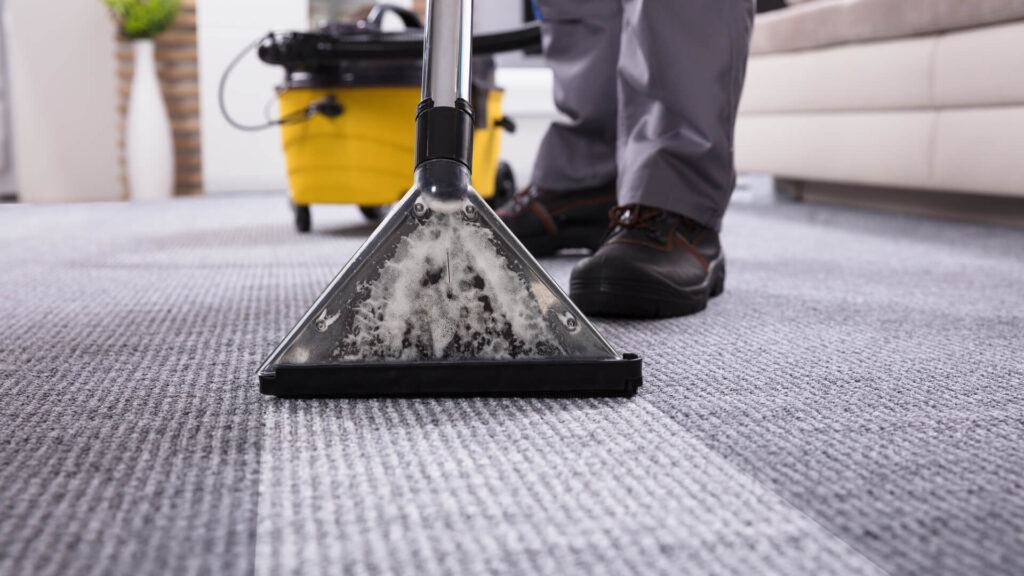
Professional hot-water extraction—sometimes called steam cleaning, though it’s not actually steam—flushes out those residues. It’s the only method that cleans the entire depth of the carpet, not just the surface. We use a truck-mounted system that heats water to 210°F and applies it under pressure, then extracts it with a vacuum that pulls from the backing up. That heat kills dust mites and bacteria. The extraction removes the dissolved soil.
The cost is usually between $150 and $300 for a typical living room, depending on size and condition. Compare that to the cost of replacing carpet, which runs $4 to $8 per square foot installed. A professional cleaning every 12–18 months can double the lifespan of a carpet. That’s not an exaggeration—we’ve seen it in homes we service regularly.
There are also situations where DIY is genuinely dangerous. If you have a pet urine problem that’s been sitting for weeks, the urine has crystallized in the pad and possibly the subfloor. Cleaning the surface won’t fix the smell. You need enzyme treatment, extraction, and potentially pad replacement. We’ve had customers try to mask the odor with baking soda and vinegar, which only creates a chemical reaction that makes the smell worse. That’s a job for someone with an industrial fan, a moisture meter, and experience.
The Tool You’re Probably Ignoring
We’ll end with something that costs nothing and makes a huge difference: doormats.
Not the thin, decorative ones that slide around. We mean heavy-duty, absorbent mats at every exterior door. A good doormat captures up to 80% of the soil that would otherwise end up in your carpet. That’s 80% less abrasive grit grinding into your fibers.
Most people have one mat at the front door and nothing at the back. Or they have a mat that’s too small—people step over it, not onto it. The ideal setup is a two-mat system: one outside to scrape off heavy dirt, one inside to absorb moisture and fine particles. The inside mat should be at least three feet long so people take two full steps on it.
We’ve seen homes where the carpet near the entryway looked brand new after three years simply because the homeowner was obsessive about doormats. It’s the cheapest carpet maintenance investment you can make.
What Actually Works
Here’s the honest truth: carpet maintenance is boring. There’s no magic spray or gadget that replaces good habits. Vacuum slowly. Blot, don’t scrub. Use enzyme cleaners with patience. Keep doormats everywhere. And every 12 to 18 months, let a professional with real equipment do the heavy lifting.
If you’re in Queens and your carpet feels rough underfoot, or you’ve noticed that spots keep reappearing, or you just want to reset before the holidays, Queens Carpets Cleaning can handle it. We’ve been working in these neighborhoods long enough to know what works and what doesn’t. Sometimes the best thing you can do is step back and let someone else handle the wet part.
Your carpet will last longer. Your indoor air will be cleaner. And you’ll stop fighting a losing battle with stains that keep coming back.
Related Articles
Effective Techniques To Minimize Dust Mites, Pollen, And Pet Dander In Carpets
What Not To Do When You Spot A Stain On Your Favorite Rug
Rug Cleaning Frequency For Busy Entries
The Pre‑Vacuum, Spot‑Treat, And Deep‑Clean Sequence Explained
A Rental Property Owner’s Playbook For Long-Lasting Carpet Condition
A No-Nonsense Guide To What Actually Makes A Carpet Look Clean
A Methodical Checklist That Guarantees A Flawless Residential Carpet Clean
Is Dry Carpet Cleaning Enough — A Comparison That Settles The Debate
People Also Ask
After a professional cleaning, your carpet is highly receptive to care, and proper maintenance extends its life significantly. For the first 24 hours, avoid walking on the surface and keep pets off to allow the fibers to dry completely. Once dry, vacuum thoroughly to remove any loosened soil and restore the pile's texture. To prevent rapid re-soiling, place walk-off mats at entrances and consider applying a protective treatment. For ongoing freshness, vacuum high-traffic zones at least twice a week. For deep-set allergens or stains, schedule regular professional touch-ups. For a comprehensive strategy, we recommend reviewing our internal article titled An Allergy‑Focused Carpet‑Care Routine For A Healthier Living Space to integrate allergy-conscious habits into your routine. At Queens Carpets Cleaning, we advise blotting spills immediately with a clean cloth, never rubbing, to prevent permanent damage.
Carpet is absolutely not outdated in 2026, but its role has evolved significantly. Modern consumers are moving away from wall-to-wall shag and toward low-profile, textured styles in neutral tones that offer both comfort and a clean, contemporary aesthetic. The industry has also responded to past criticisms with advanced stain-resistant fibers and eco-friendly manufacturing. While hard surfaces remain popular for high-traffic kitchens and entries, carpet still excels in bedrooms and living areas for its acoustic insulation, warmth underfoot, and slip resistance. The key is selecting a high-quality, durable product and maintaining it properly. For professional upkeep that extends the life of your modern flooring, a service like Queens Carpets Cleaning can keep your investment looking fresh and sophisticated for years to come.
To keep your carpet looking fresh, start with a consistent vacuuming routine—at least twice a week in high-traffic areas to remove gritty dirt that damages fibers. Address spills immediately by blotting with a clean cloth and a mild detergent solution; never rub, as this pushes stains deeper. Use doormats at entrances to reduce the amount of soil tracked inside, and consider removing shoes indoors. For deeper revitalization, schedule a professional hot water extraction every 12 to 18 months to lift embedded grime and restore texture. Between cleanings, sprinkle baking soda before vacuuming to neutralize odors. For a thorough evaluation of equipment, our internal article titled 'Unsponsored Real-World Impressions Of Popular Carpet Cleaning Machines And Detergents' (Unsponsored Real-World Impressions Of Popular Carpet Cleaning Machines And Detergents) offers practical insights. At Queens Carpets Cleaning, we recommend these steps to maintain a vibrant, healthy carpet year-round.
The best professional carpet cleaning method is hot water extraction, commonly known as steam cleaning. This industry-standard technique involves injecting a heated cleaning solution deep into the carpet fibers, then using powerful suction to extract the water, dirt, and allergens. It is highly effective for deep cleaning, removing stubborn stains, and eliminating bacteria without leaving harsh chemical residues. For delicate materials like wool, a low-moisture encapsulation method is often preferred, as it dries faster and prevents fiber damage. At Queens Carpets Cleaning, we always assess your carpet’s fiber type and soiling level before recommending a process. For property owners, our internal article Queens’ Secret To Spotless Vacation Rentals offers tailored advice on maintaining pristine flooring between professional visits. Regular professional care, ideally every 12 to 18 months, significantly extends your carpet’s lifespan.